
Aquaplaning
When water on the road, not just conduct, helps explain the accident.
Water on the road, three crashes in a row
The case
- Four vehicles were involved in three successive collisions, in the rain, on a downhill curve of a single-carriageway road. Two women drivers were injured.
- The police report said one of the cars “would have crossed” into the opposite lane. It was an assumption: no physical trace in the file showed it.
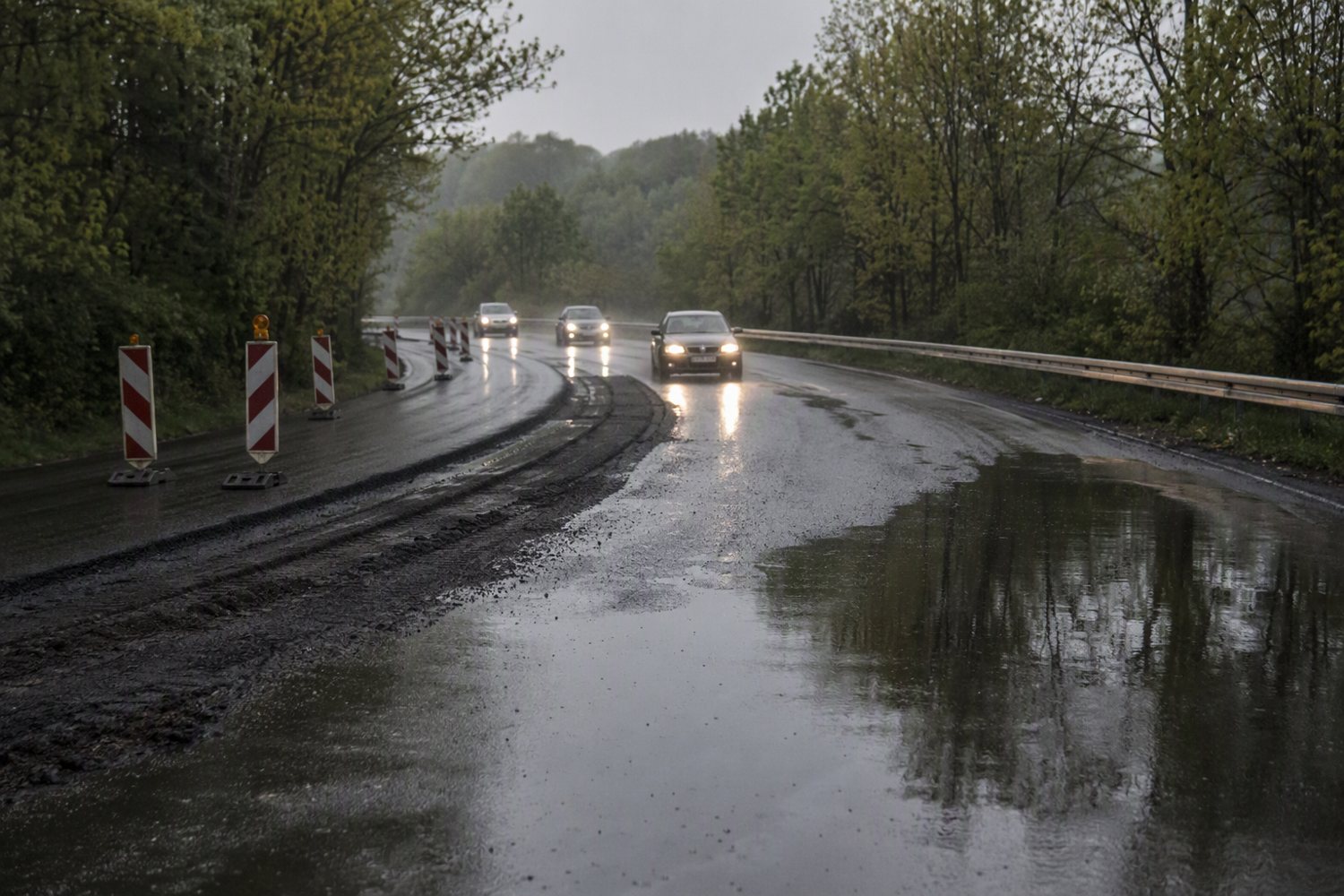
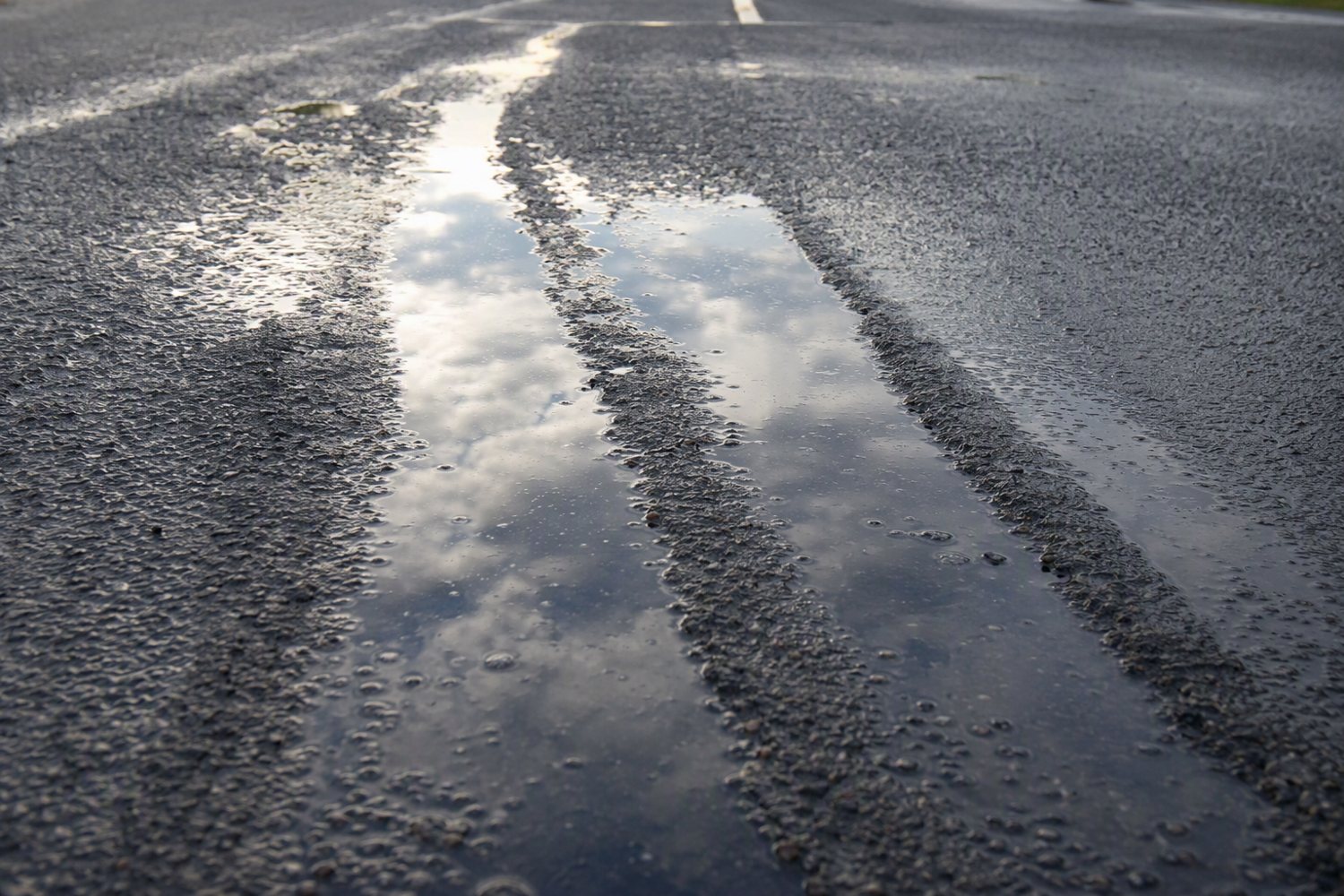
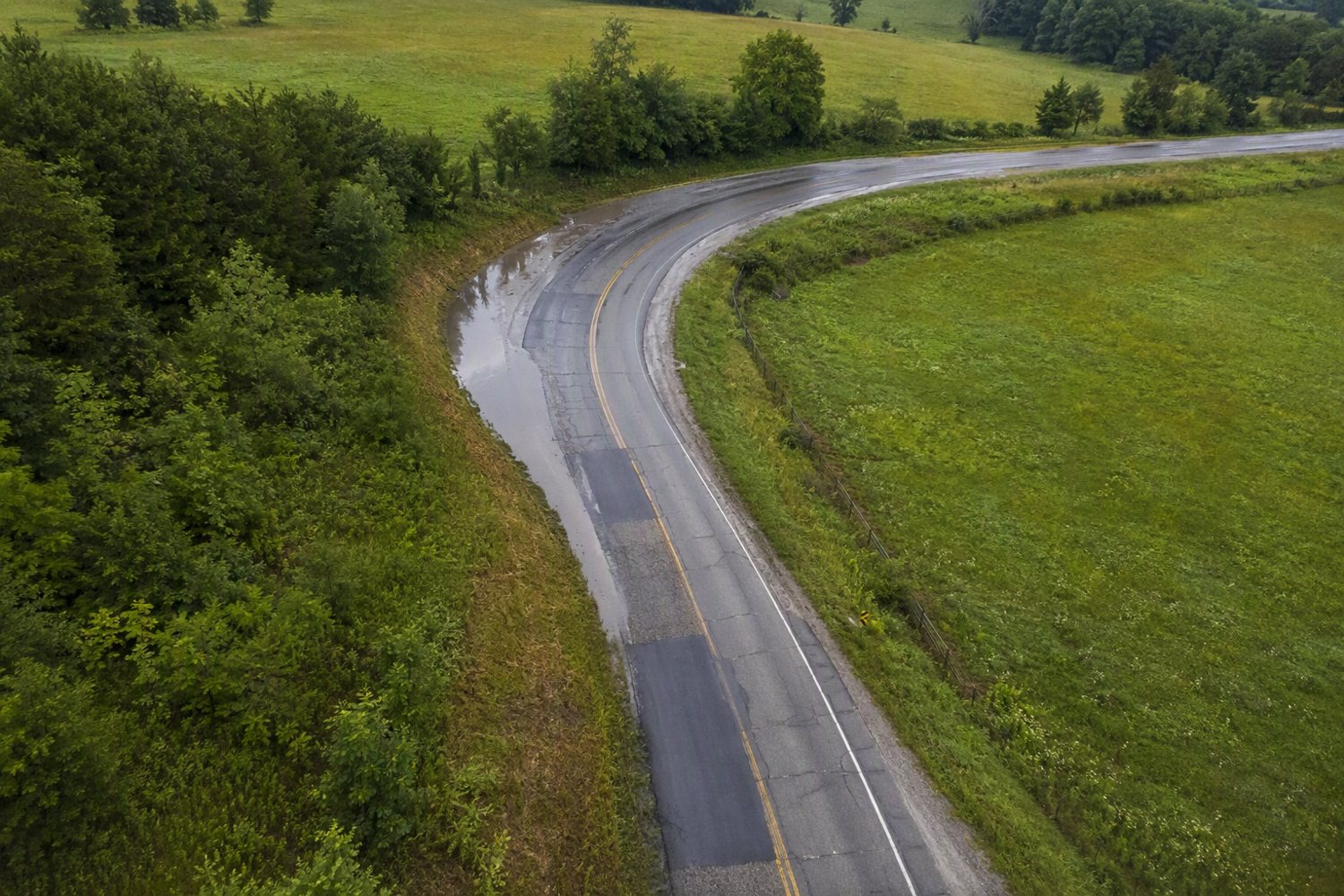
- On the site visit, even after resurfacing, there was a lot of water on the road at the curve entry, from wheel-track rutting and incorrect superelevation.
- The debris on the asphalt and the vehicles’ final positions marked the three crash points.
How we helped the client
The vehicles could not be inspected, so we rebuilt the facts from the photographs in the case file and the site visit, and showed the sequence of the three collisions.
The first collision happened in the lane of the woman being sued: it was the other car that crossed into the oncoming lane, swerving away from the truck and the spray its wheels threw up.
The pooled water, a pavement defect, led her car to run closer to the centre line, exposed to the risk of anyone crossing over.
The three collisions, in order
Why water pooled in the curve
The first collision happened in the small car’s lane, with the other car crossing into the oncoming lane. Pooled water on the road contributed by pushing the small car closer to the centre line, exposed to the intrusion.