
Dismantling technical reports
Critical review of official reports, using the material’s own photographs and data.
When the official report got the crash site wrong
The case
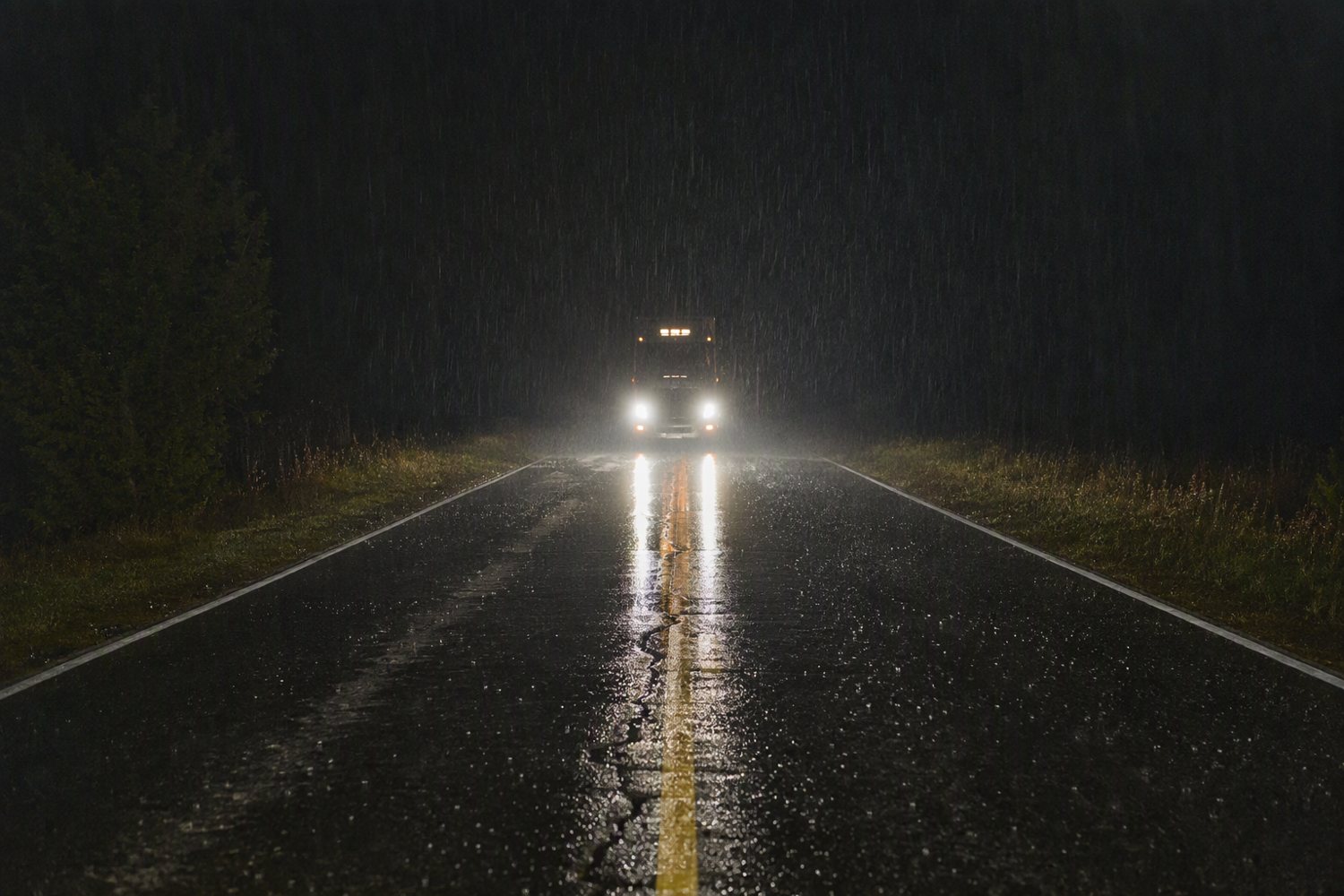
- A pickup and a semi-trailer truck collided head-on, at night in the rain, on a rural road with an 80 km/h limit. The pickup driver died.
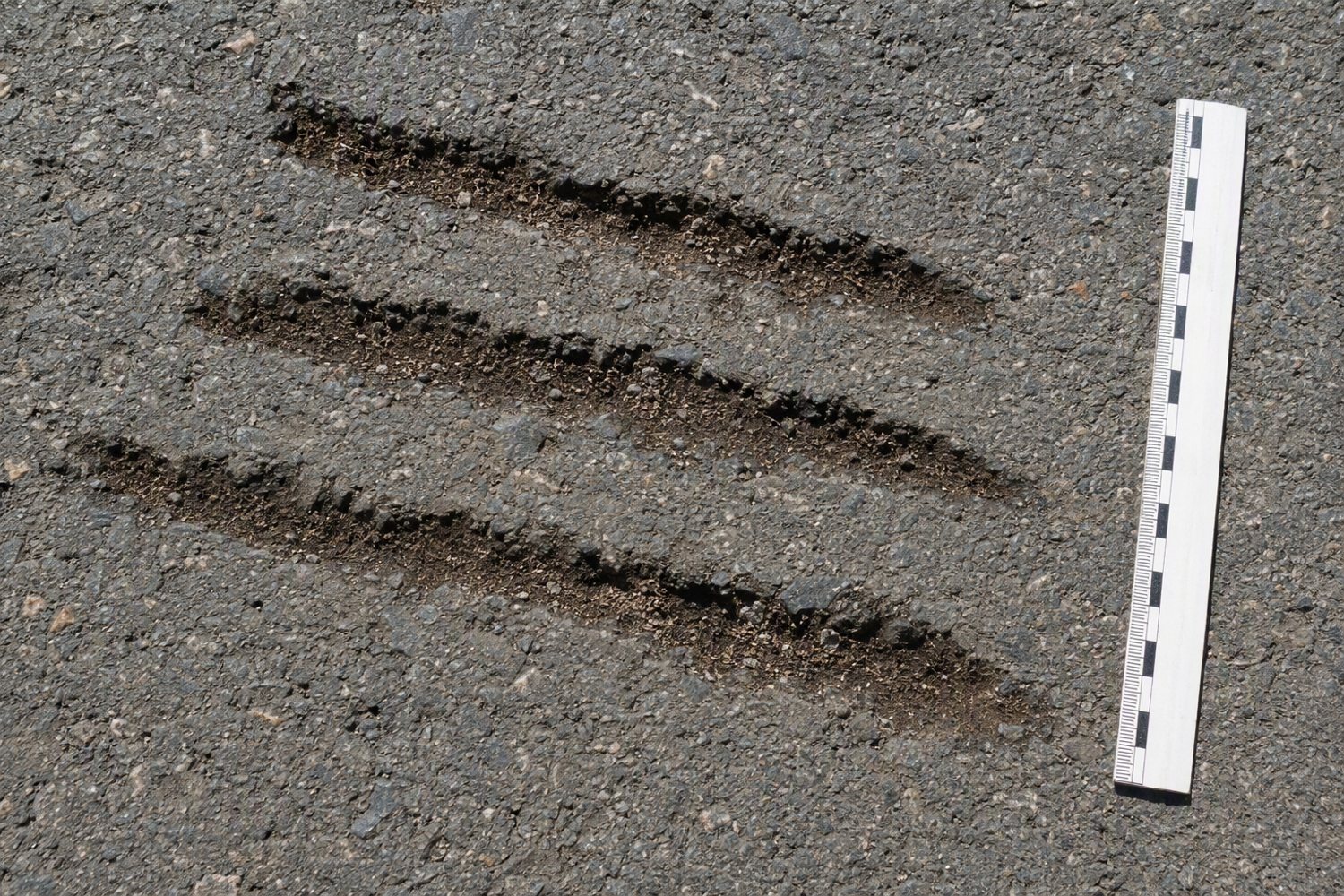
- The official report put the crash on the shoulder, in the truck’s lane, based on gouge marks in the asphalt.
- In the report’s own photos the marks had soil in the bottom of the grooves: they were there before the accident.
- For the official site to hold, the pickup would have pulled out of the shoulder against traffic and the truck would have driven into it, without swerving or braking.
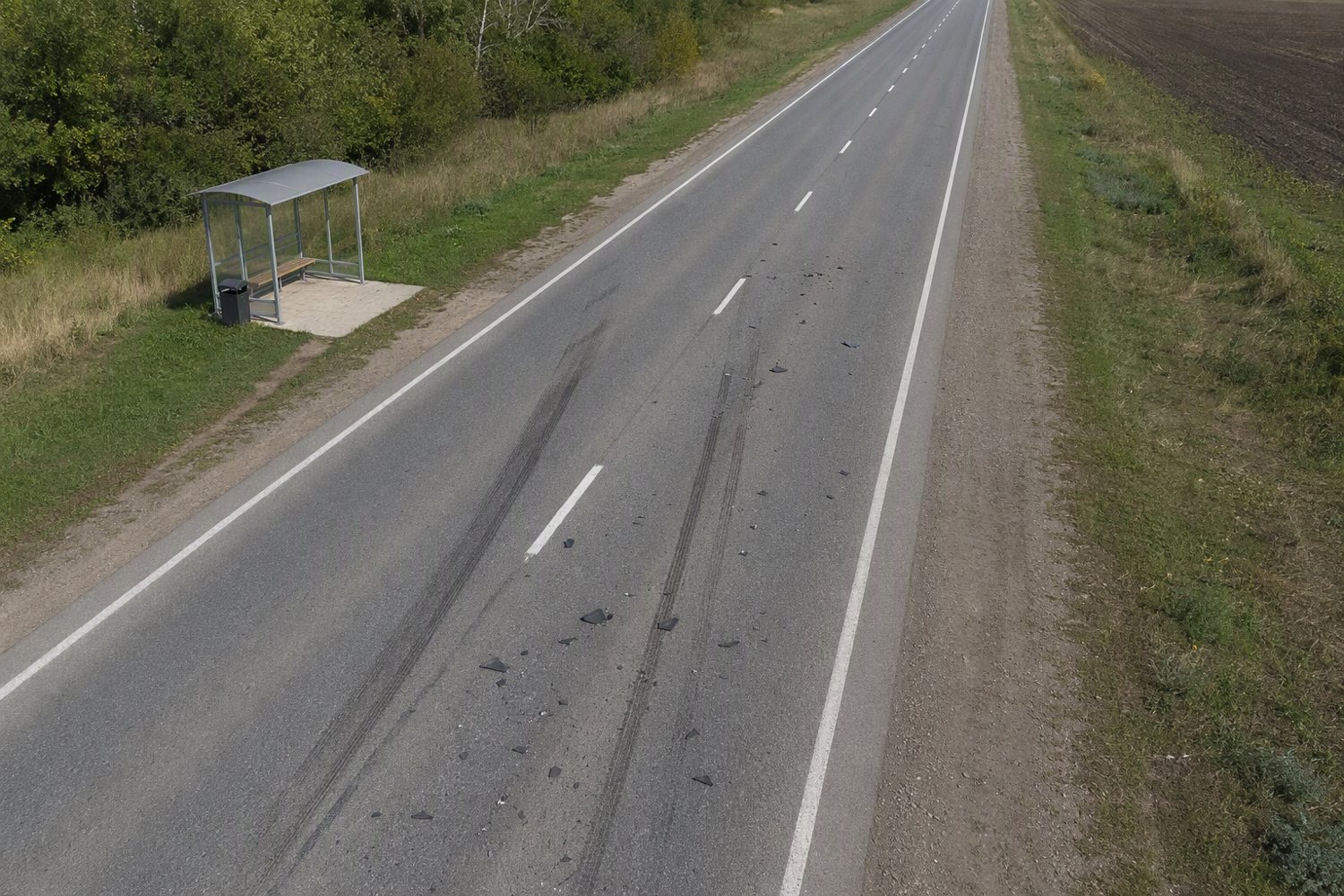
- The tachograph discs were neither analysed nor seized, and the tyre marks on the verge were mixed with those of a bus stop.
How we helped the client
The victim’s estate hired us to review the official report. We worked only from the report’s own photographs and data, and showed, point by point, why the crash site did not add up.
The report’s photos showed two parallel braking marks from dual wheels, starting in the pickup’s lane, and more debris in that lane. It was the most consistent point of impact.
Using the report’s data (masses, friction, distances travelled), conservation of energy gave about 113 km/h for the truck. Since the official examination never analysed the tachograph, the figure is an indication, and the opinion says so.
Where the crash happened: the official report and our opinion
The truck’s speed, using the official report’s data
The crash site given in the official report is not correct. Most likely it was in the pickup’s lane, with the truck crossing into the oncoming lane at a speed far above the limit.
In this case, the conclusion of our opinion was decisive in turning the case around, and the judge specifically cited it in the grounds of the decision.